
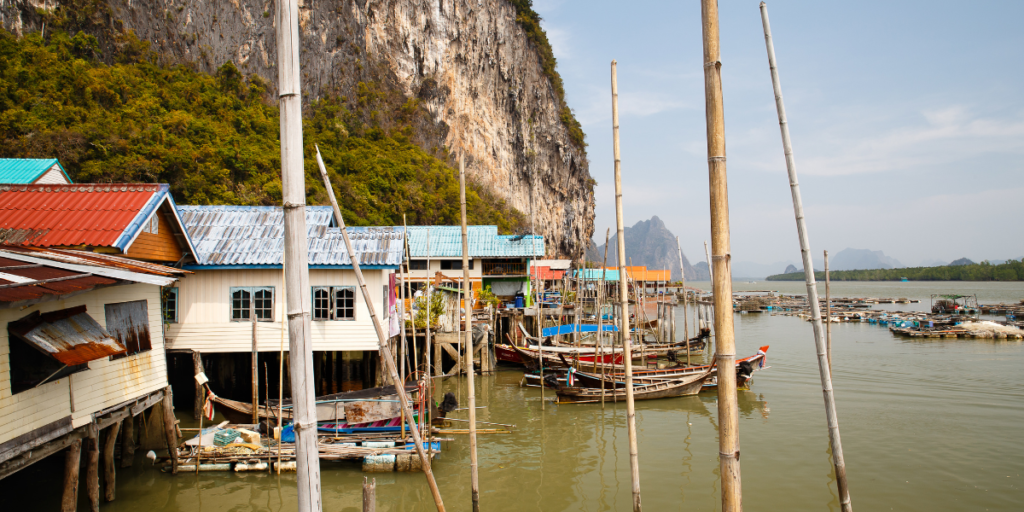
Local Culture & Communities – Koh Panyee, Sea Gypsies and Thai Customs
James Bond Island may be a natural wonder, but the people who live around Phang Nga Bay have their own rich culture. From the floating village of Koh Panyee to the sea gypsies (Chao Ley) and the fishing communities of Phuket and Krabi, this area has been home to generations of Malay, Muslim, and Buddhist families. This guide introduces you to their way of life, explains local customs, and gives you practical tips for respectful travel.
🏠 Experience local life on a tour 🏠
Most day tours include a stop at Koh Panyee for lunch. You can walk through the village, see the floating football pitch, and buy handmade souvenirs.
🚤 Book a Cultural Tour →Koh Panyee – The Floating Muslim Village
Koh Panyee is the most famous community in Phang Nga Bay. It is a village built entirely on wooden stilts over the water, at the base of a limestone karst. About 1,500 people live here, all descendants of Malay fishermen who settled around 200 years ago. The village has a mosque, a school, several shops, restaurants, and – most famously – a floating football pitch. The pitch was built on a raft because there is no flat land. The story of the village’s football team became a short film (and later a documentary) that inspired many.
Today, Koh Panyee is a standard stop on almost all James Bond Island tours. You will have about an hour for lunch and a walk. The restaurants serve fresh seafood, Thai curries, and rice. Prices are reasonable – a meal costs around 150‑250 THB. You can also buy batik cloth, carved shells, and t‑shirts. The people are friendly, but they expect you to buy something if you use the toilet or take photos of their homes. Be respectful: ask permission before photographing any person, especially inside the mosque area. Women should cover their shoulders and knees when near the mosque.
Chao Ley – The Sea Gypsies
The Chao Ley (also called Moken or Urak Lawoi) are a group of nomadic sea people who traditionally lived on boats or in temporary huts on the beach. They have lived in the Andaman Sea for hundreds of years, moving with the seasons and the fish. Today, most Chao Ley have settled in permanent villages on islands like Koh Lipe, Koh Lanta, and Phuket (Rawai Beach). A few still practice free‑diving for sea cucumbers and lobster.
In Phang Nga Bay, you may see Chao Ley fishing boats – small wooden canoes with a single outboard motor – near the mangroves. The Chao Ley are famous for their ability to see clearly underwater without goggles (they constrict their pupils). However, they are generally shy of tourists. If you visit a Chao Ley village (for example, on Koh Sireh near Phuket), do not take photos without permission and do not give money or sweets to children – it encourages begging. Instead, buy handicrafts or hire a guide from the community.
Local Fishing Communities
Scattered along the coasts of Phuket, Phang Nga, and Krabi are many small fishing villages that are not tourist attractions. You will notice the longtail boats tied up at the piers, the nets drying in the sun, and the smell of shrimp paste. These communities are predominantly Muslim or Buddhist. The fishermen work at night and sleep during the day. They catch squid, crab, shrimp, and small fish. Some also farm oysters or raise fish in floating cages.
If you drive from Phuket to Phang Nga town, you can stop at any coastal village (e.g., Baan Bang Rong or Baan Laem Sai). There are no entrance fees. You can buy fresh seafood directly from the boats – early morning (6‑8 AM) is the best time. Be polite: a simple “Sawasdee krap” (hello for men) or “Sawasdee ka” (for women) goes a long way. Do not take photos of the fish without asking, as it may interfere with their work.
Thai Customs and Etiquette – Dos and Don’ts
Understanding a few basic customs will make your visit smoother and more enjoyable.
- The wai greeting: Press your palms together at chest level and bow slightly. You do not need to wai everyone – only monks, elderly people, or as a thank you. If someone wais you first, return it.
- Respect for the King and Buddhism: Do not step on coins or banknotes (they have the King’s image). Do not point your feet at a Buddha image or a monk. If you sit, keep your feet flat on the floor, not pointing at anyone.
- Temple behaviour: Remove shoes before entering any building with a Buddha image. Dress modestly – cover your shoulders and knees. Do not touch the monks (women must never touch a monk or pass something directly to him; place it on a cloth instead).
- Head and feet: The head is considered sacred – never pat a Thai person on the head, not even a child. The feet are considered dirty – do not point them at people or sacred objects. Use your right hand to give or receive items (the left hand is for toilet duties).
- Loss of face: Thais avoid confrontation and raising their voice. If you get angry, you lose face and they will lose respect for you. Keep calm and smile – known as “jai yen yen” (cool heart).
Thai Buddhism and Its Influence
More than 90% of Thais are Theravada Buddhists. You will see temples (wats) everywhere, with golden Buddhas and monks in orange robes. The belief in karma (that good actions bring good results) means that locals are generally helpful and kind to strangers. However, they also believe in spirits and ghosts (phi). You may see spirit houses – small wooden shrines outside homes and businesses – where food and drink are offered to protect the property.
When you visit James Bond Island, you are in a national park, not a religious site, but the nearby mainland temples (like Suwan Khuha) are active places of worship. Be quiet and respectful. Do not disturb monks who are meditating or praying. Taking photos is allowed, but never with a flash inside the main hall.
Local Festivals Near Phang Nga Bay
If your visit coincides with one of these festivals, you will see a different side of Thai culture:
- Loy Krathong (November): People float small decorated baskets (krathong) on the water to thank the river goddess. On Phang Nga Bay, some tours offer sunset cruises where you can float your own krathong.
- Songkran (April 13‑15): Thai New Year water festival. Expect water fights everywhere, but also temple ceremonies. Many shops close.
- Ramadan (date varies): If you are in a Muslim village like Koh Panyee during Ramadan, restaurants will be closed during daylight. Be understanding and bring your own snacks.
Your tour operator may adjust schedules during festivals. Ask before booking.
Respectful Photography
It is polite to ask before taking a photo of a person, even if they are in a tourist area. A simple smile and point to your camera, then a thumbs‑up, is enough. If they say no, respect that. Do not give money to people who pose for photos – it creates a begging culture. For monks, do not use a flash and keep a respectful distance (at least 2 metres). Never take photos of anyone inside a toilet or mosque prayer hall.
Food and Drink Customs
Thai people eat with a spoon and fork – the spoon is used to bring food to the mouth, the fork only to push food onto the spoon. Chopsticks are used only for noodle dishes. In a group, dishes are shared. It is polite to take a portion from the dish onto your own plate, not to eat directly from the shared dish. Always leave a little food on your plate to show you are full – finishing everything implies you are still hungry.
On Koh Panyee, you will be served seafood. If you have allergies or dietary restrictions, tell your guide. The locals are Muslim, so no pork is served. Alcohol is not available on the village (as it is Muslim), but some tours include beer on the boat. Do not bring alcohol into the village – it is disrespectful.
Language Tips for Visitors
English is spoken at tourist sites and by your guide, but learning a few words in Thai will be appreciated:
- Hello (male): Sawasdee krap
- Hello (female): Sawasdee ka
- Thank you (male): Khob khun krap
- Thank you (female): Khob khun ka
- Yes: Chai
- No: Mai chai
- How much? Tao rai?
- Delicious: Aroi
Do not be shy – even a clumsy attempt makes people smile. And remember “Mai pen rai” – never mind – if you make a mistake.
Frequently Asked Questions About Local Culture
Q: Is it okay to take a photo of the floating football pitch?
A: Yes, the pitch is public and often photographed. But if children are playing, step back and do not interrupt them.
Q: Can I visit a Chao Ley village?
A: Yes, but it is better to go with a guide who knows the community. Do not just walk into houses.
Q: Should I tip at Koh Panyee restaurants?
A: Tipping is not expected but appreciated. 20‑50 THB is fine.
Q: Is it okay to wear shorts in the village?
A: On the walkways, yes. But when entering the mosque area, cover your legs and shoulders. A sarong is useful.
Q: What is the best way to support the local community?
A: Buy directly from villagers (handicrafts, food) rather than from large shops. Pay a fair price without bargaining too hard.
Q: Are there any taboos I should know about?
A: Do not touch a person’s head. Do not point your feet at anyone. Do not step over someone who is sitting. Do not raise your voice.
Final Word From Local Experts
The people of Phang Nga Bay have lived here for centuries – long before James Bond arrived. They have adapted to tourism while keeping their traditions. When you visit Koh Panyee, you are not just seeing a “floating village” – you are seeing a real community where children go to school, parents work, and grandparents pray. Treat them with the same respect you would expect in your own home. A smile, a “Sawasdee krap”, and a little patience will make your visit more memorable than any photo.
Remember: “Sabai sabai” – take it easy. “Mai pen rai” – never mind. And enjoy the warmth of local Thai hospitality.
— Written by the team at VisitJamesBondIsland.com