
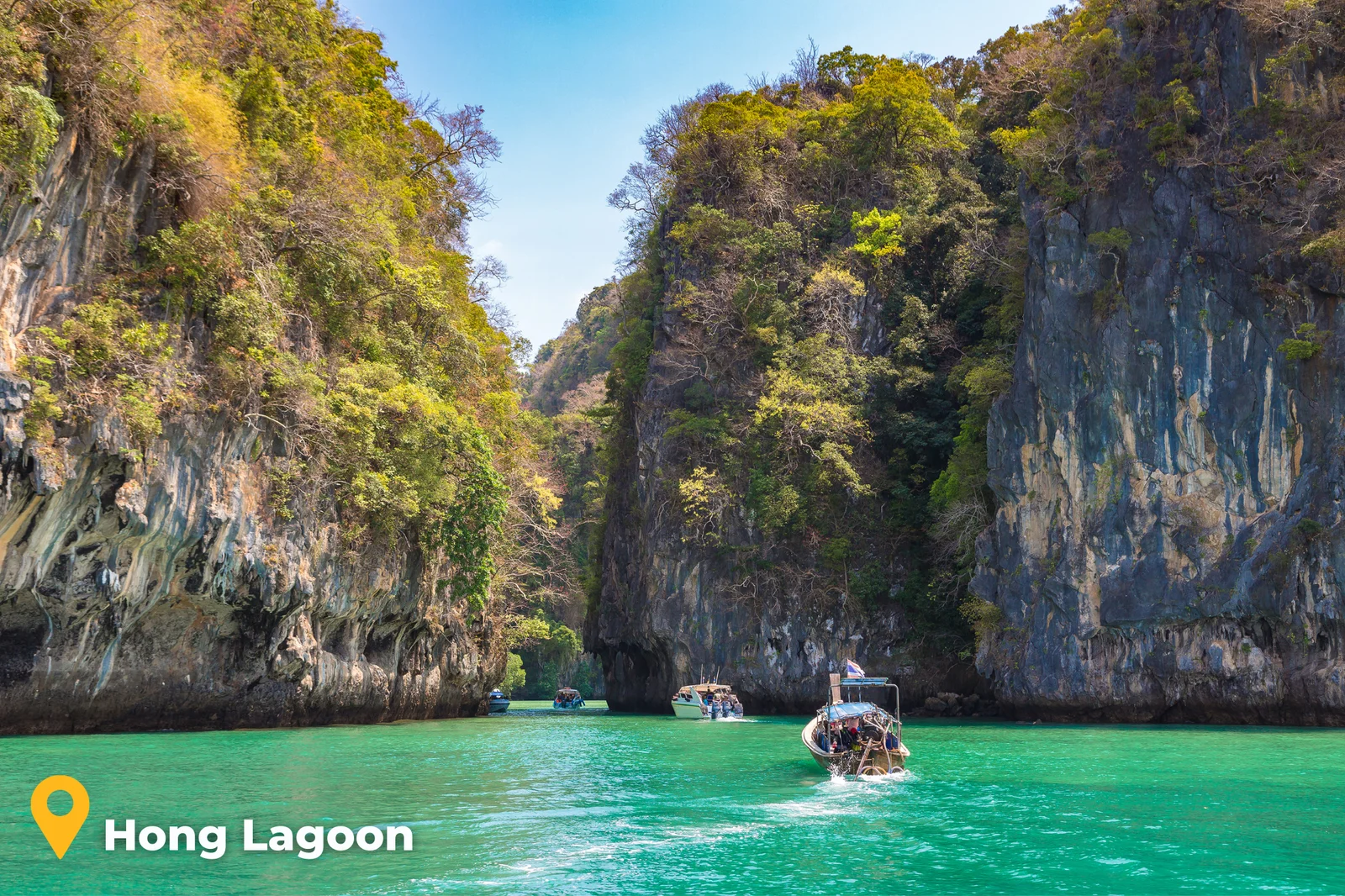
Hong Island – The Room of Emerald Water
Hong Island (Koh Hong) is a stunning group of islands in Phang Nga Bay, famous for a hidden lagoon called “Hong Lagoon”. The word “Hong” (ห้อง) means “room” in Thai – because the lagoon is completely enclosed by vertical limestone cliffs, like a secret room. You enter through a narrow passage at low tide. Inside, the water is calm and emerald green, perfect for swimming. Outside, there is a beautiful white sand beach for relaxing and snorkelling. Most Phang Nga Bay tours include Hong Island as a highlight.
🏝️ Swim in a natural hidden room 🏝️
Visit Hong Island on a speedboat or longtail tour. Relax on the beach, snorkel with tropical fish, and kayak into the lagoon. Tours from Phuket start around 1,500 THB per person.
🚤 Book a Hong Island Tour →Where Is Hong Island?
Hong Island is located south of James Bond Island, near the border between Phang Nga and Krabi provinces. The exact coordinates are approximately 8°12′N 98°36′E. There are actually two “Hong Islands” in the region: one near Krabi (Koh Hong Krabi) and one inside Phang Nga Bay. This page refers to the one inside Phang Nga Bay, which is part of Ao Phang Nga National Park. It is a common stop on tours that also visit Panak Island and James Bond Island. The island is uninhabited, but day visitors use the beach and lagoon.
The Lagoon – A Collapsed Cave
The famous lagoon of Hong Island is a “hôrng” (ห้อง) – a karst feature formed when the roof of a large cave collapsed. The remaining walls are the original cave walls, and the water inside is seawater that enters through a narrow opening at the base. The lagoon is about 100 metres wide and surrounded by 50‑metre high cliffs. The water is deep (5‑10 metres) and very calm – ideal for swimming. Because the cliffs block wind, the water surface is often like glass. The colour is emerald green because of light reflecting off the white limestone sand on the bottom and the algae in the water.
To enter the lagoon, you must go through a low, narrow passage at one end. At high tide, the passage may be completely submerged – you cannot enter. At low tide, you can kayak or swim through. Most tours schedule the visit for low tide. Your guide will lead a kayak inside; you can also swim if you are a strong swimmer (the current can be tricky).
The Beach – White Sand and Snorkelling
Outside the lagoon, Hong Island has a beautiful crescent‑shaped beach with powdery white sand. The beach slopes gently into clear water. You can swim, sunbathe, or snorkel along the rocky edges. The coral reef is not as rich as the Similan Islands, but you will see many small fish: sergeant majors, parrotfish, butterflyfish, and sometimes clownfish. The best snorkelling is near the rocky headlands on either side of the beach. Be careful of sea urchins – wear water shoes.
The beach has basic facilities: a small toilet (sometimes locked, ask your guide), a ranger station, and a few shaded areas. No restaurants – your tour will provide lunch on the boat or at Koh Panyee.
Activities at Hong Island
- Swimming in the lagoon – the main attraction. Calm, warm, surreal.
- Snorkelling – around the beach and near the lagoon entrance. Bring a mask.
- Kayaking – paddle through the passage into the lagoon. Your tour may include a kayak.
- Photography – the cliffs and emerald water are spectacular. The best light is 10‑11 AM when the sun is high enough to light the entire lagoon.
- Beach relaxation – the sand is soft, and the water is clear. Perfect for a midday break.
Most tours stay at Hong Island for 1‑1.5 hours – enough time to snorkel, swim, and relax.
Wildlife at Hong Island
Because Hong Island is a protected area, wildlife is relatively abundant. In the lagoon, you may see small reef fish, blue‑spotted rays (harmless), and occasionally blacktip reef sharks (small, not dangerous). On the cliffs, look for monitor lizards sunning themselves. Birdwatchers can spot white‑bellied sea eagles, kingfishers, and terns. The island is also a nesting site for several species of seabirds – keep noise levels down to not disturb them.
How Hong Island Compares to Panak Island
Hong Island is about light, open water, and a bright sky. Panak Island is about darkness, caves, and mystery. Both are excellent, but if you can only visit one, choose Hong for swimming and relaxation; choose Panak for adventure and geology. Many tours include both on the same day – because they are only 15 minutes apart by boat. See our Panak Island guide for the other side of the experience.
Practical Information for Visiting Hong Island
- Best time: Low tide (to enter the lagoon). Morning (9‑11 AM) before crowds arrive.
- What to bring: Swimwear, towel, reef‑safe sunscreen, snorkel mask (if you have your own), water shoes.
- What not to do: Remove coral or shells, feed fish, touch sea urchins, or stand on the fragile coral heads.
- Facilities: Basic toilet (10 THB fee). No food or drink – bring your own or eat on the boat.
Frequently Asked Questions About Hong Island
Q: Is the lagoon safe for swimming?
A: Yes, the water is calm and deep. No strong currents. However, do not swim near the cliff edges – falling rocks are possible.
Q: Can I enter the lagoon without a kayak?
A: You can swim through the entrance passage. You must be a confident swimmer, and the water can be murky near the rocks. Most people prefer a kayak.
Q: Are there jellyfish in the lagoon?
A: Rare, but possible during the monsoon season (July‑October). Your guide will check. If present, you will be advised not to swim.
Q: Is the beach crowded?
A: Yes, during peak season (December‑February) many tours gather between 11 AM‑2 PM. Visit early (9‑10 AM) or late (3‑4 PM).
Q: Can I stay overnight on Hong Island?
A: No. No accommodation. The nearest overnight stays are on Koh Yao Noi or Phuket.
Q: Is the lagoon entrance always open?
A: No, only at low tide. If you arrive at high tide, you can still enjoy the beach and snorkelling, but you cannot enter the lagoon.
Final Word From Local Experts
Hong Island is a place that feels like a secret, even when it is busy. The moment you glide through the narrow passage and the lagoon opens up around you – the cliffs rising high, the water reflecting the sky – you forget that there are other people. It is one of the few spots in Phang Nga Bay where you can swim in total calm, surrounded by nature’s architecture. Take a deep breath, float on your back, and look up. The limestone walls seem to reach for the clouds. That is the magic of Hong.
Remember: “Hong thammachat” – nature’s room. Treat it with respect. Do not litter. Do not touch the rocks. And carry that peace with you back to your boat.
— Written by the team at VisitJamesBondIsland.com