
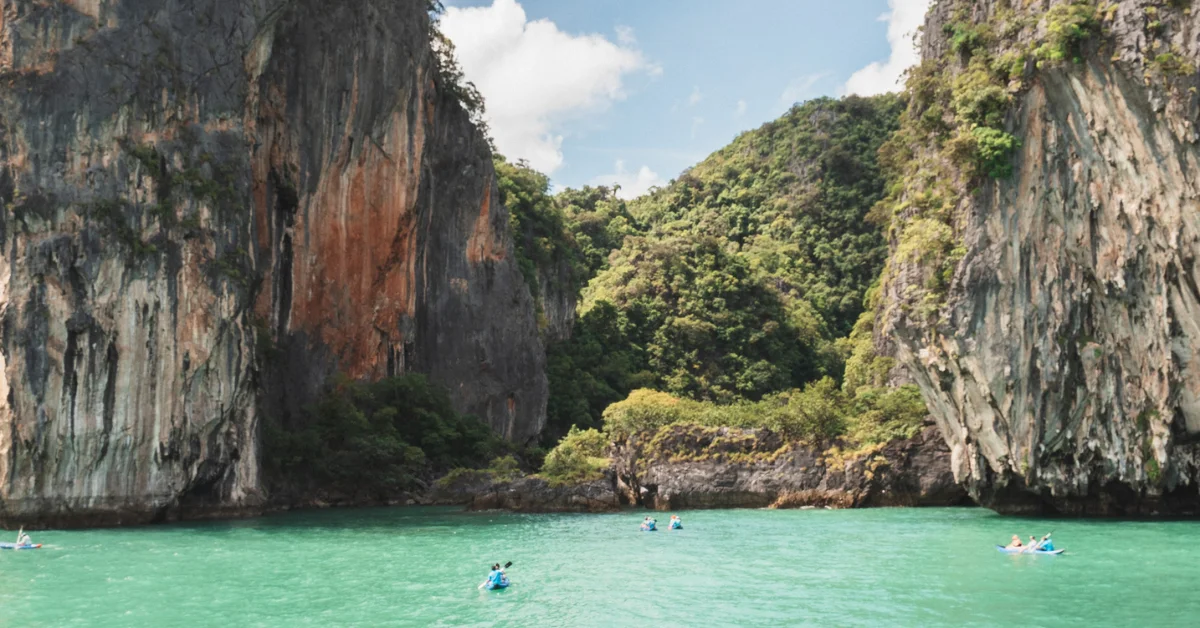
Panak Island – Sea Caves, Mangroves and the Ice Cream Cave
Panak Island (Koh Panak) is a large limestone island located in the southern part of Phang Nga Bay, not far from James Bond Island. It is famous for its dramatic sea caves, especially the “Ice Cream Cave” (Tham Nam), which you can enter by kayak at low tide. The island also has beautiful mangrove forests, hidden lagoons, and a chance to see monkeys and monitor lizards. Most standard James Bond Island tours include a stop at Panak for kayaking.
🛶 Kayak into a hidden world 🛶
Join a tour that includes Panak Island. Paddle through dark caves, see stalactites, and emerge into a quiet lagoon. Tours start around 1,500 THB per person.
🚤 Book a Kayaking Tour →Where Is Panak Island?
Panak Island is located about 8 kilometres south of James Bond Island (Khao Phing Kan). Its coordinates are approximately 8°16′N 98°31′E. The island is part of Ao Phang Nga National Park. It is not as famous as its neighbour, but many tour operators include it because of the unique cave experience. The island has no permanent residents, but you may see fishermen resting in the shade of the cliffs. The surrounding water is shallow (1‑3 metres), making it ideal for kayaking.
The Ice Cream Cave (Tham Nam)
Tham Nam (Water Cave) is the main attraction. It is nicknamed “Ice Cream Cave” because of the white stalactites that hang from the ceiling – they look like dripping ice cream cones. The cave is a marine cave that is flooded at high tide. You can only enter by kayak during low tide (when the water level is below the cave entrance). The entrance is a narrow opening, sometimes less than 1 metre high. Your kayak guide will instruct you to lie flat, paddle gently, and keep your head down. Inside, the cave opens into a large chamber with a small pebble beach. The guide shines a torch to show the stalactites, stalagmites, and the tiny shells embedded in the rock. It is dark, cool, and completely quiet – only the sound of dripping water. You can get out of the kayak and walk around for a few minutes before returning to the exit.
The formation of the cave: sea water, combined with fresh rainwater, dissolved the limestone along a fault line. Over thousands of years, the crack widened, and the waves undercut the base, creating a tunnel. The stalactites formed from dripping water that left behind calcium carbonate. The cave is still active – new stalactites are growing, but very slowly (about 1 centimetre per 100 years). Do not touch them – skin oils stop the growth.
Other Caves on Panak Island
Besides Tham Nam, Panak has several smaller caves and notches. Some tours also visit “Tham Sai” (sand cave) or a low mangrove tunnel on the western side. The mangrove tunnel is lined with red mangroves and you can see small crabs and mudskippers. Only longtail boats can access the tunnel because it is very shallow. Speedboats cannot go there – they will anchor at the main beach and launch kayaks from a floating platform.
Wildlife Around Panak Island
Panak is famous for its crab‑eating macaques. They live on the cliffs and often come down to the water’s edge. Do not feed them – they are clever and can become aggressive. You may also see water monitor lizards swimming near the mangroves. They are shy and will usually swim away. Above, look for white‑bellied sea eagles and Brahminy kites circling. In the water, small fish like archerfish and mudskippers live in the mangroves.
Activities at Panak Island
- Kayaking through the cave (main activity) – takes about 20‑30 minutes including the time inside. Most tours provide a kayak with a paddler (you don’t need to paddle yourself unless you want to).
- Mangrove exploration – paddle through a narrow channel lined with mangroves. Quiet and shady.
- Beach walk – Panak has a small beach (only at low tide). Not good for swimming because of rocks, but nice for photos.
- Wildlife watching – monkeys, lizards, birds.
No swimming at Panak – the water is too shallow and rocky. Your tour will swim at Hong Island or a different spot.
Practical Information for Visiting Panak Island
- Best time: Low tide is essential for cave entry. Most tour operators time the visit accordingly. Ask your guide before booking.
- What to bring: Water shoes (you may step into water when getting out of the kayak inside the cave), a waterproof camera, and a small torch (your guide has one, but a backup helps).
- What not to do: Touch stalactites, litter, feed monkeys, or stand up in the kayak inside the cave (you will hit your head).
- Duration of stop: Typically 45‑60 minutes.
How Panak Island Compares to Hong Island
Panak is more about caves and darkness; Hong Island is about lagoons and light. Both are usually included in the same tour because they are close. If you have to choose, pick Panak for the thrill of entering a dark cave; pick Hong for swimming in a bright green lagoon. For a detailed description of Hong, see our Hong Island guide.
Frequently Asked Questions About Panak Island
Q: Can I go inside the cave without a guide?
A: No. You must go with a licensed tour guide who knows the tide schedule and the safe route. The cave can be dangerous at high tide.
Q: Is the cave suitable for people with claustrophobia?
A: The entrance is narrow and dark. If you have severe claustrophobia, skip the cave and stay on the kayak outside. The guide can accommodate.
Q: Can I take photos inside the cave?
A: Yes, but use a high ISO setting – no flash (it disturbs wildlife and other visitors). A waterproof phone case is useful.
Q: Are there toilets on Panak Island?
A: No. Use the facilities on your tour boat before arriving.
Q: What is the “Ice Cream Cave” name in Thai?
A: Locals call it “Tham Nam” (water cave). The nickname comes from tourists who thought the stalactites looked like cold desserts.
Q: How old are the stalactites?
A: Some are thousands of years old, but the cave is relatively young (geologically). The stalactites grow about 1‑2 cm per century.
Final Word From Local Experts
Panak Island is not as famous as James Bond Island, but it offers a more intimate experience. Paddling into a dark cave, hearing only the drip of water and your own breathing, is a memory that stays with you. The rock formations are delicate – please do not touch them. The monkeys are cheeky – keep your bags closed. And the mangroves are quiet – listen to the bird calls.
Remember the Thai saying: “Khao nai tham” (enter the cave) but also “Ok jak tham” (exit the cave). Trust your guide, stay calm, and enjoy the hidden beauty of Panak. Then come back out into the sunlight and the turquoise water. It is a journey from dark to light that you will not forget.
— Written by the team at VisitJamesBondIsland.com