
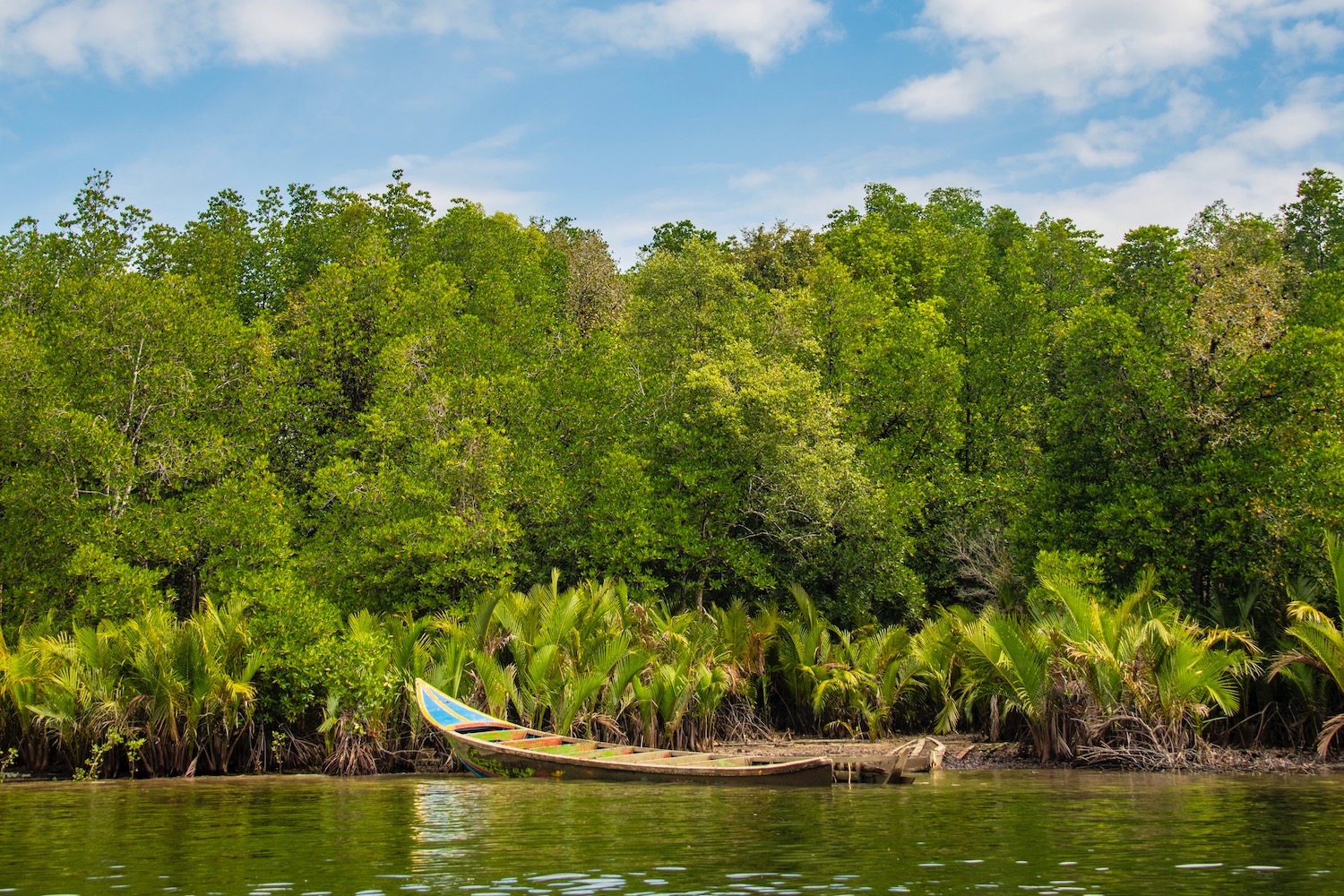
Mangrove Forest – The Green Lungs of Phang Nga Bay
Mangrove forests are coastal wetlands found in tropical and subtropical regions. In Phang Nga Bay, they line the mainland shores, especially near Phang Nga town and Koh Panyee. These salt‑tolerant trees grow in the intertidal zone – between high and low tide. They are critical for coastal protection, fish nurseries, and carbon storage. This page explains why mangroves matter, what wildlife they support, and how you can visit them responsibly.
🌿 Explore the mangroves by kayak 🌿
Some tours include a paddle through mangrove channels. A quiet way to see birds and monkeys.
What Are Mangroves?
Mangroves are not one species but a group of about 70 different trees and shrubs that can survive in salty water. They have special adaptations: some have roots that grow upwards (pneumatophores) to breathe air; others have stilt roots that stabilise the tree in soft mud. The most common species in Phang Nga Bay are Rhizophora apiculata (red mangrove) and Avicennia alba (black mangrove). The forest provides a unique ecosystem where land, sea, and fresh water meet.
Why Mangroves Are Important
- Nursery for fish: Juvenile fish, shrimp, and crabs hide among the roots. Many commercial fish species spend their early life in mangroves.
- Coastal protection: Mangroves reduce wave energy and prevent erosion. They are a natural barrier against storms and tsunamis.
- Carbon storage: Mangroves store up to four times more carbon per hectare than tropical rainforests – “blue carbon”.
- Water filtration: The roots trap sediment and pollutants, keeping the bay clean.
- Wildlife habitat: Birds, monkeys, otters, and monitor lizards live in the mangroves.
Despite their importance, half of the world’s mangroves have been lost in the last 50 years to shrimp farms, coastal development, and pollution. Ao Phang Nga National Park protects what remains.
Wildlife in the Mangroves
- Birds: Collared kingfishers, little herons, brahminy kites, and migratory shorebirds.
- Mammals: Crab‑eating macaques (monkeys) foraging at low tide, smooth‑coated otters (rare).
- Reptiles: Water monitor lizards, mangrove snakes, and occasionally saltwater crocodiles (very rare, not in tourist areas).
- Aquatic life: Mudskippers (fish that walk on mud), archerfish (shoot water to knock insects into the water), fiddler crabs, mangrove horseshoe crabs.
Visiting Mangrove Forests
You cannot walk into the mangroves on your own – the mud is deep and the roots are tricky. However, some tour operators offer kayak trips through the mangrove channels, especially on Panak Island and near the mainland of Phang Nga. These tours are usually part of a longer James Bond Island itinerary. You can also visit **Khao Khao Mangrove Nature Trail**, a small boardwalk near Phang Nga town (entrance fee around 100 THB). It is a 500‑metre loop with informative signs. Best time: early morning (7‑9 AM) when the birds are active.
For a full half‑day experience, consider a **mangrove kayaking and monkey watching** tour from Phang Nga town. These cost around 1,000‑1,500 THB per person and include a local guide. You will paddle through narrow channels, see mudskippers, and feed the monkeys (not recommended, but some tours do it).
Conservation and Respect
When visiting mangroves:
- Do not litter – plastic bags kill marine animals.
- Do not touch the roots or break branches – it takes decades for mangroves to grow.
- Do not remove any animals (crabs, shells, fish).
- Use reef‑safe sunscreen – chemicals harm the ecosystem.
- Keep noise to a minimum – birds and fish are sensitive to sound.
The national park also prohibits speedboats within 100 metres of the mangroves. If you are in a kayak, keep a safe distance from nesting birds (usually marked by park signs).
Best Time to Visit
Low tide is the best time to see crabs, mudskippers, and wading birds. The low tide exposes the roots and creates small pools. High tide is better for kayaking because the channels are deeper. Visit early morning or late afternoon – midday heat makes the mud smelly and the animals hide.
How to Get to the Mangroves
The closest mangrove forest to James Bond Island is on the mainland near the Tha Dan pier (Phang Nga town). From Phuket, you can take a taxi (1 hour, 1,200 THB) or join a tour that includes a mangrove stop. Many private longtail tours from Phang Nga town offer mangrove trips for 1,500‑2,000 THB for a 2‑hour paddle. There is no public boat to the mangroves – you must hire a guide.
Frequently Asked Questions
Q: Are there crocodiles in the mangroves?
A: Very unlikely. Saltwater crocodiles exist in some parts of Thailand but are extremely rare in Phang Nga Bay. No attacks on tourists have ever been recorded.
Q: Can I swim in the mangroves?
A: Absolutely not. The water is murky, the mud is deep, and there are harmful creatures like jellyfish and sea urchins. Stay in the kayak.
Q: Do I need a guide?
A: Yes, for kayaking. The channels can be confusing, and you might get stuck at low tide. A guide also points out wildlife.
Q: Are mosquitoes a problem?
A: Yes, especially at dawn and dusk. Wear repellent and long sleeves.
Q: Can I combine mangrove kayaking with a visit to James Bond Island?
A: Yes, some tours do both – typically a private longtail tour from Phang Nga town. It is a full day (8‑10 hours).
Final Word From Local Experts
The mangroves of Phang Nga Bay are often overlooked by visitors who focus only on the limestone karsts. But this green fringe is just as important. It is the nursery that feeds the bay, the wall that protects the shore, and the home of many creatures. Gliding silently through a mangrove channel, with only the sound of birds and water, is a peaceful experience far from the crowds. If you have an extra half day, do not miss it. And when you go, go with respect – take nothing but photos, leave nothing but footprints (or better, paddle strokes).
Remember the local phrase: “Pa chon lae pen baan plaa” – the mangrove forest is the home of fish. Protect it, and it will keep providing for generations.
— Written by the team at VisitJamesBondIsland.com